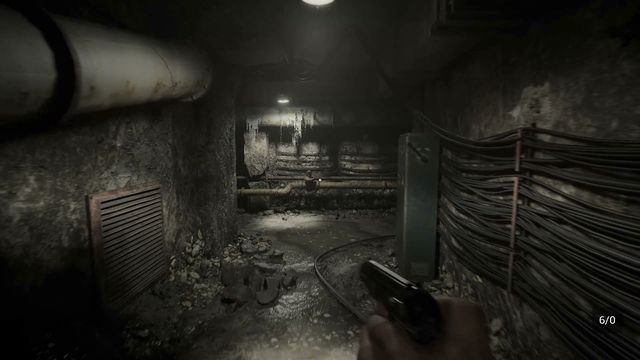
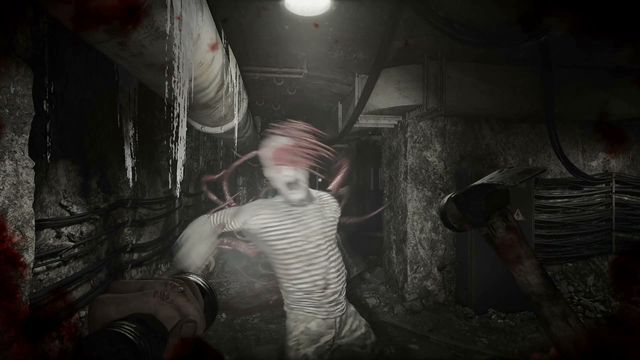
Enemies and threats
The enemies are described as the spawn of a primordial evil that hunt with intent: they learn, adapt, form packs and change tactics when they read your next move. That single sentence is the most important thing on the store page, because it changes how you approach every encounter.
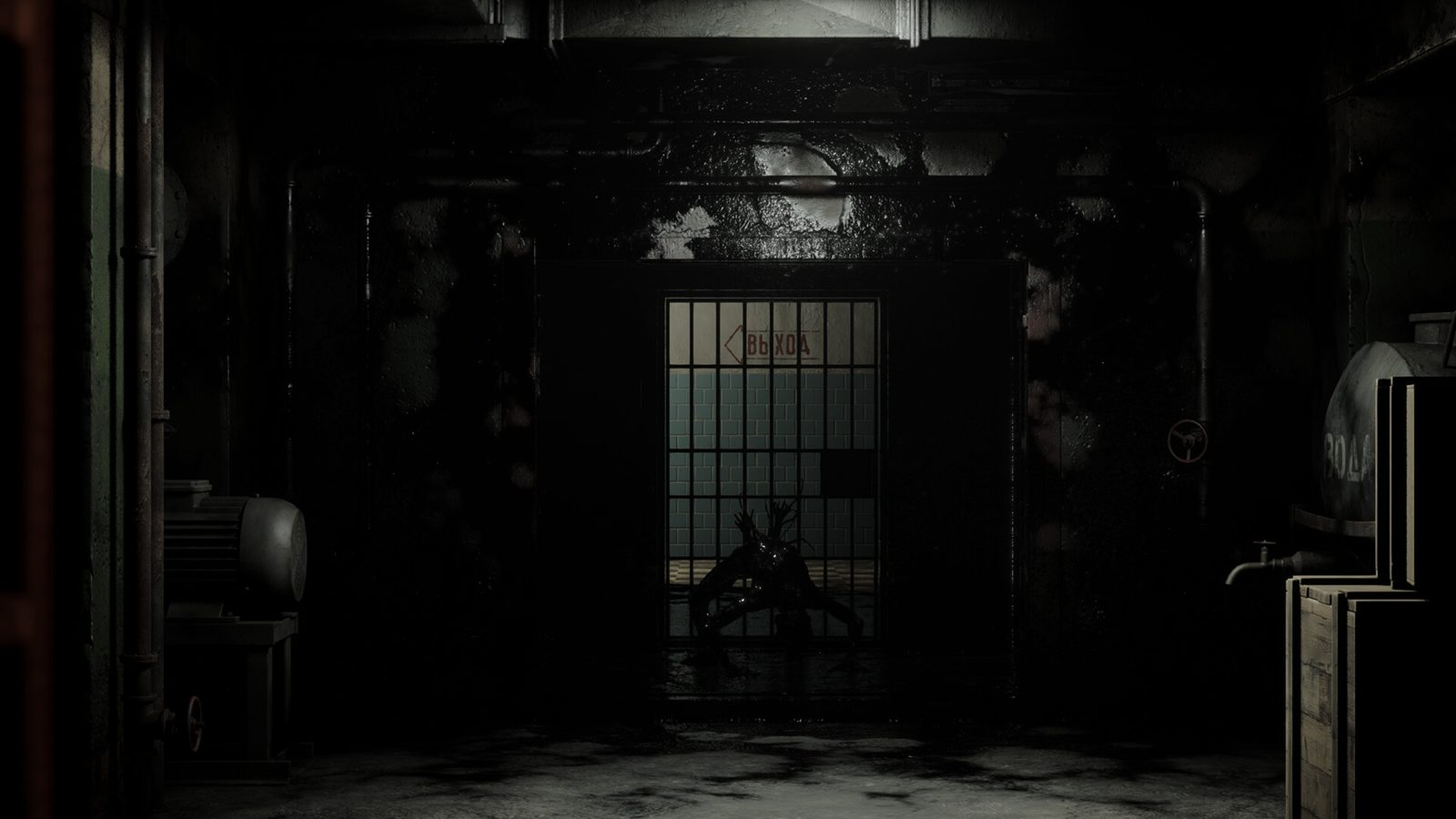
The store page devotes one paragraph to enemies and it is the most mechanically specific paragraph on the whole listing. It does not describe how the creatures look. It describes how they behave.
Face the spawn of primordial evil. In a world governed by its own cruel laws, its creatures hunt with cunning intent — they learn, adapt, form packs, and change tactics the moment they sense your next move.
Four verbs: learn, adapt, form packs, change tactics. That is a design brief for an enemy AI, and it tells you more about how the game will feel than any screenshot.
What "spawn of primordial evil" establishes
The enemies are not people, not infected humans and not a military experiment gone wrong in the conventional sense. They are described as the spawn of a primordial evil — something that predates the settlement built around it. Hellhole was constructed to contain them, not to create them.
That inversion matters. In most facility horror, the monsters are the result of the experiments. Here the experiments are the response to the monsters: decades of containment, isolation and study. The people were the ones improvising.
The store copy also frames the creatures as operating under "a world governed by its own cruel laws". That is a hint at internal logic — the things in Hellhole follow rules, but not human ones. Systems-driven horror usually expresses that through behaviour rather than dialogue.
The adaptive claim, taken seriously
"They learn, adapt, form packs, and change tactics the moment they sense your next move" is a promise with consequences. If it holds, four habits stop working.
Camping a doorway. A scripted enemy walks into a kill zone. An adaptive one that has already lost members to that doorway is described as changing tactics — which usually means flanking, waiting, or going around.
Repeating a stealth route. Pack behaviour plus adaptation suggests a route that worked once may be watched the second time.
Fighting to the last round. If creatures sense your next move, an empty weapon is information you are broadcasting.
Treating a cleared room as safe. This is the biggest one. Packs imply movement, and movement implies that cleared space is only cleared temporarily.
None of those are confirmed mechanics — they are the natural reading of the sentence the studio chose to publish. But the sentence exists to set exactly this expectation, and if the released game does not do it, the marketing will have oversold the most distinctive thing about it.
Packs change the geometry of a fight
"Form packs" is a specific claim, not a general one. A pack means the threat scales with numbers, and numbers change how space works.
In a corridor, a pack cannot flank, so a pack is a queue — which favours the defender and makes the shotgun's short range less of a liability. In a room or a churchyard with multiple approaches, a pack is a surround, and a surround punishes standing still.
That is why the trailer's mix of tight interiors and open churchyard is not just visual variety. It is a change in the rules of engagement. Expect the outdoor spaces to be the dangerous ones for a player who has learned to fight in corridors.
Beings worthy of the Four Horsemen
The storytelling pillar names the scale of the major threats separately from the ordinary creatures: "come face to face with beings worthy of the Four Horsemen of the Apocalypse."
"Beings", plural, and compared to Conquest, War, Famine and Death. That is a comparison about significance rather than appearance — the point of the Four Horsemen as a reference is that they are not monsters to be defeated but forces that arrive.
What that means mechanically is unknowable right now. What it means tonally is that the game intends at least one threat that is not a fight in the ordinary sense. Games that use this reference usually mean an encounter you survive rather than win.
The other named set piece, "Satan's blood-soaked ball", belongs in the same category — a location with a host, which is to say a being with intent, rather than a level with enemies in it.
Environmental threats
The listing says nothing explicit about hazards, traps or environmental damage. The trailer does show the two things that usually function as hazards in this genre: darkness that requires a handheld light, and interior spaces with locked gates, barred windows and painted prohibition signage.
Both are threat-shaped. A light you must carry is a beacon; a locked gate is a route decision; a barred window is a place where something can see you and you cannot reach it.
Practical habits worth forming now
You cannot practise against an AI that is not released, but the described behaviour rewards a specific mindset, and it is the opposite of how most players approach a shooter.
- Change approach angles. If the system reads your next move, predictability is the vulnerability.
- Break contact rather than finish fights. A pack that loses you has to reacquire you; a pack that is engaged keeps growing.
- Never treat a retreat as safe because it was safe before. Movement is the thing you are told the enemies do.
- Keep a reserve. Resource management and adaptive enemies compound: the fight you cannot afford is the fight that goes long.
- Expect two tiers of threat. Ordinary creatures that can be fought, and named beings that are probably not a combat problem to solve.
What is not published
There is no enemy count, no bestiary, no boss list, no spawn logic and no difficulty table. Anything claiming to list "all monsters in Nature of Dread" is inventing them; the studio has shown creatures on camera and named none of them. For how those creatures are meant to be fought, see Combat and weapons.